
© 2026 MerwinAsia
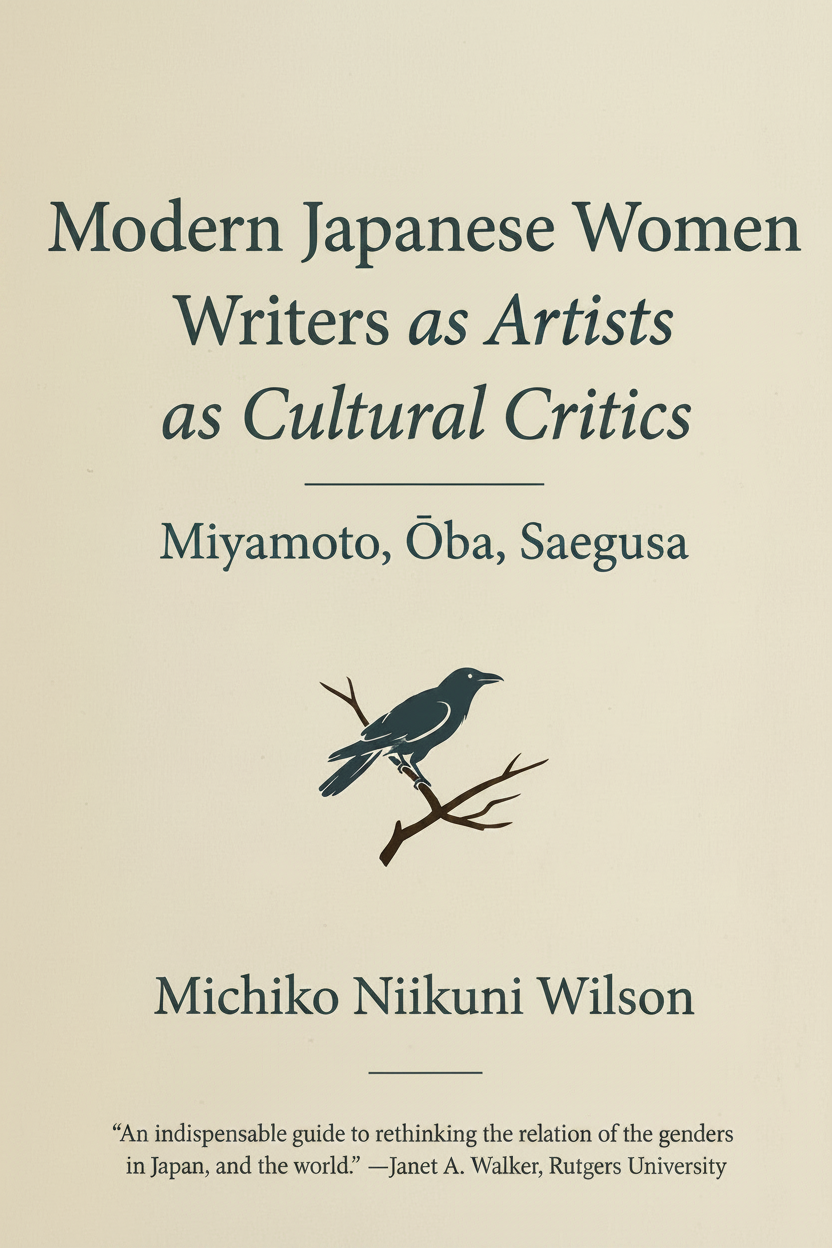
Modern Japanese Women Writers as Artists as Cultural Critics
Miyamoto, Ōba, Saegusa
M.N. Wilson
2016, 188 pages • index • illustrated
ISBN 978-0-9832991-2-7 Paper
ISBN 978-0-9832991-3-4 Cloth
Michiko Niikuni Wilson is Professor Emerita of Modern Japanese Literature and Comparative Literature at the University of Virginia.
Translated and discussed are critical essays by three of the most innovative, outspoken, and provocative women writers in recent Japanese literary history: Yuriko Miyamoto, Saegusa Kazuko, and Minako Oba with the objective of presenting a Japan that thrives on a multiplicity of voices, in contrast to its conformist image in the West. This English translations of primary sources is accessible to non-Japan specialists.
The notion of women as “cultural critics” stretches back to the Heian era (797-1190), and is exemplified by Sei Shōnagon's The Pillow Book (992), which, with its wit, barbed references, and no-nonsense comments on life around her, heads the Japanese literary canon. Her legacy reappeared after a long hiatus in the generation of women writers who swiftly took advantage of the “Taishō (1911-1926) Democracy.”
The “Woman Question” in Japan today, which many Japanese women view as a basic human rights issue, has been revisited by contemporary writers who continue to developa feminist credo espousing the equality of men and women.
